

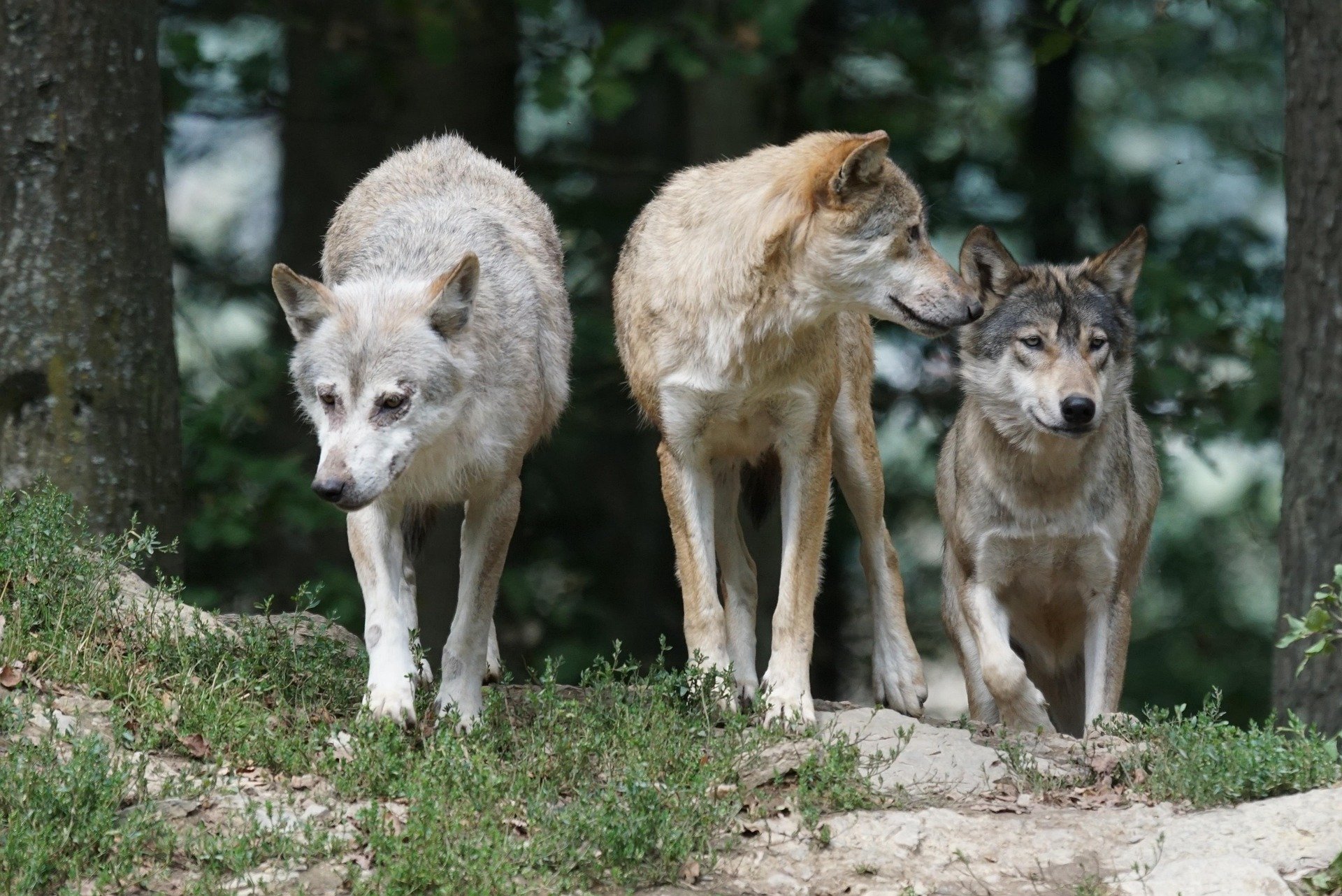
Wolf numbers increased until about two years ago, but now appear to be declining. This is the starting point for Alberto Meriggi, former professor of Ecology at the University of Pavia, as he describes the most recent phase of wolf presence in northern Italy. His is not an official estimate or census, but a field-based perception built over years of observation, along transects he still surveys even after retirement.
“In some areas where I once found dozens of signs of presence, I now observe far fewer,” he explains. According to the researcher, several factors may be at play: the decline in wild boar linked to African swine fever, changes in prey availability, and above all the movement of packs դեպի lower elevations. Rather than a disappearance, it appears to be a redistribution, with traditional mountain and hill habitats now saturated.
This shift helps explain the current stage of the wolf’s return. After consolidating its presence along the Apennines and in hilly areas, the species continued to expand into the Po Valley. “The increase didn’t stop in the mountains—the wolf moved into the plains, even crossing the Po River,” says Meriggi, who has followed the phenomenon since the 1980s.
Today, the most striking development is the wolf’s adaptation to a very different environment. In lowland areas, where forests and ungulates are less common, wolves have altered their diet. “Coypu has become the primary prey,” he notes, referring to the semi-aquatic rodent widely found in agricultural landscapes. The choice reflects availability and ease of capture. “It’s an adaptable animal, more than an opportunistic one,” he adds, stressing that prey selection still reflects pack experience.
This shift has also affected interactions with human activities. In the early phases of recolonization, when wild prey was scarcer, livestock attacks were more frequent. “Today they have decreased,” Meriggi says, highlighting the role of preventive measures, especially electric fencing. “Where predation occurs, the response should be prevention—not the idea of solving the problem by killing a few wolves.”
Ecological corridors, such as the Ticino area, remain crucial for dispersal, particularly at night, when wolves minimize contact with humans. This behavior confirms the species’ ability to coexist in heavily human-shaped landscapes while maintaining avoidance strategies.
However, Meriggi argues that public perception often diverges from reality. “Many reports and videos circulating are false or taken out of context,” he says, noting how this amplifies a polarized debate. He also urges caution on issues such as hybridization and attacks on dogs, which he believes are often overstated.
After nearly forty years of observation, the picture that emerges is of a dynamic species—one capable of expanding, adapting, and redistributing itself in response to environmental conditions. “The wolf continues to be a wolf,” he concludes. “The real question is whether we are still able to see it for what it is.”


Đến với Trò Chơi Slot , anh em có thể trải nghiệm thả ga những loại hình giải trí, tăng cơ hội làm giàu nhanh chóng. Dưới đây là 7 chuyên mục cá cược mũi nhọn của Trò Chơi Slot TONY06-16